Table games
Poker with a classic deck
Published
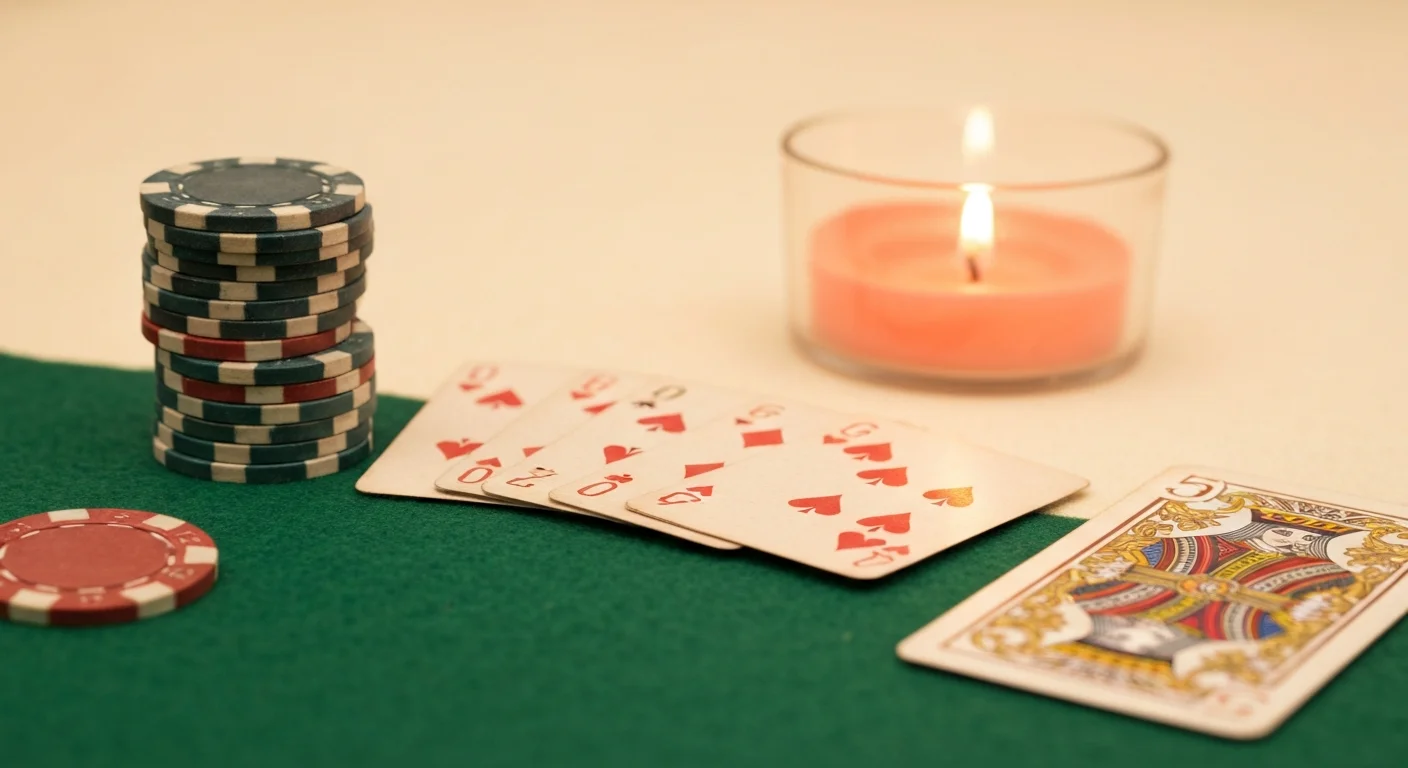
Long before LED felts and hole-card cameras, poker lived in parlours on the same classic playing cards collectors still chase today: fifty-two leaves, four suits, no jokers unless house rules say otherwise. The ink may be letterpress or modern linen stock, but the hierarchy of hands has not moved. A royal flush still crowns the table, and a well-worn ace of spades still commands respect when it slides from an antique tuck.
Five-card draw at home
Five-card draw is the gentlest introduction and the variant most often dealt from vintage decks at kitchen tables. Each player antes, receives five cards face down, and passes through a betting round. Survivors may discard up to three cards—sometimes four when showing an ace—and draw replacements from the untouched portion of the pack. A second round of betting leads to showdown. The rhythm suits old cards: deliberate shuffles, careful corners, and a dealer who knows when to retire a soft deck before the faces feather.
Texas hold'em essentials
Hold'em spreads two private cards to each seat and builds a shared board of five community cards across three streets: the flop, turn, and river. Players combine any five cards from the seven available. Blinds rotate clockwise. Whether you play limit, pot-limit, or no-limit, the standard fifty-two-card deck remains the constant—casinos and home games alike trust the same antique pattern of ranks and suits that printers have repeated for centuries.
Hand rankings and table manners
From high card through royal flush, the ladder is universal. Suits break ties only for flushes and straight flushes; otherwise they are equals. Protect your cards when using irreplaceable vintage stock. Cut gently, announce raises clearly, and keep food away from museum-grade faces. Poker rewards observation as much as mathematics, and a classic deck—slightly bowed from honest play—often tells stories before a single chip moves.