Table games
Blackjack when vintage faces meet the felt
Published
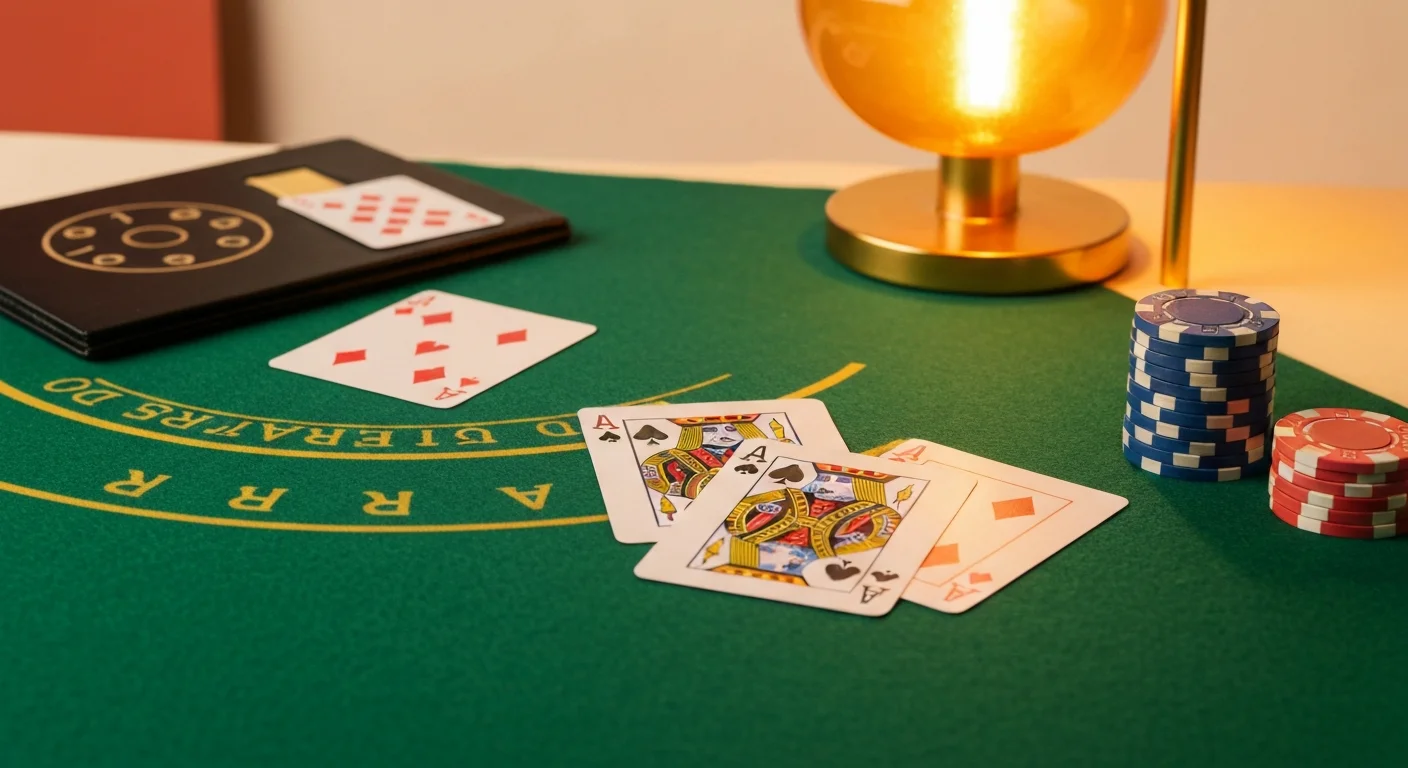
Blackjack—twenty-one to friends—asks a simple question: beat the dealer without busting. Casinos deal it from one to eight classic decks in a shoe; home games often use a single vintage pack with linen finish and softened corners. Number cards count at face value, face cards count ten, aces count one or eleven. The dealer receives one card face up and one hidden; players act in turn, hitting, standing, doubling, or splitting pairs according to house rules. The game feels modern because it dominates strip floors, yet every hand still rides on the same antique court illustrations printers have sold for generations.
Player options
Hit to take another card; stand to hold your total. Double down doubles the wager for exactly one additional card on most tables. Split matching pairs into two hands when allowed, sometimes with resplit limits. Surrender—giving up half the bet before playing certain poor hands—appears on generous rule sets. Insurance is a side bet when the dealer shows an ace; mathematically it favours the house, but it persists because the ritual is old as the cards themselves.
Dealer rules and payouts
Dealers hit soft seventeen on many floors, stand on hard seventeen on stricter ones. Blackjack—an ace plus a ten-value card on the first two cards—pays three to two on traditional tables, though always check the felt print. Push when totals tie. The dealer does not bluff; the tension is entirely in the shoe of classic pasteboards cycling past the discard tray.
Playing with collectible stock
We do not recommend dealing museum pieces for high-stakes sessions, but friendly home blackjack is how many collectors justify opening a beautiful tuck. Use sleeves if the faces are irreplaceable, cut with a wedge rather than a riffle when stock is brittle, and retire the deck when corners round past your comfort. The best blackjack decks—air-cushion finish, true poker size—feel fast without disrespecting the art on the backs.