Table games
Baccarat and the ritual of the old shoe
Published
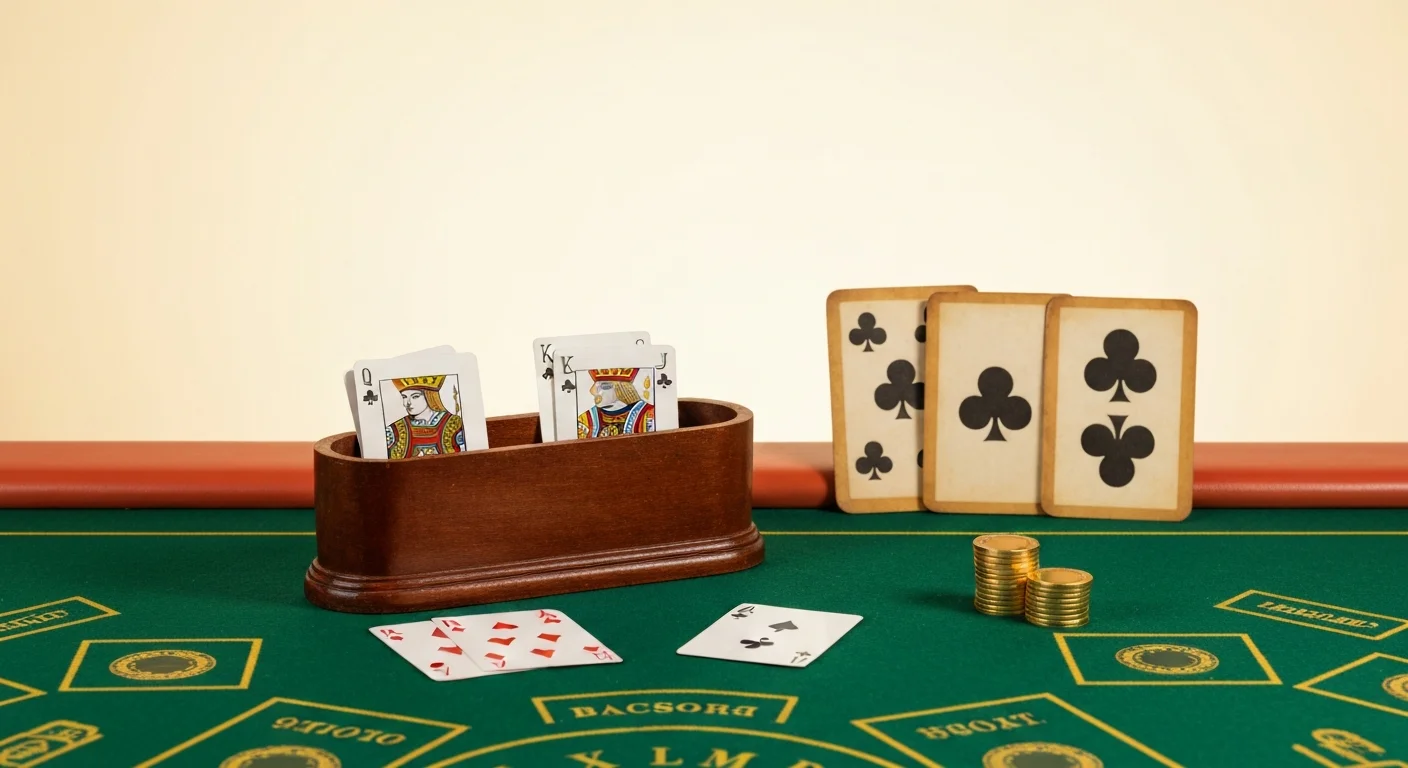
Baccarat is among the oldest casino card games still dealt from a polished shoe of classic playing cards. Punto banco—the form most players meet today—uses six or eight standard packs shuffled together. Tens and face cards count as zero; aces count as one; all other ranks keep their pip value. Only the last digit of a total matters, so nine is king and nineteen becomes nine. The ceremony looks modern under chandeliers, yet the bones are antique: French salons, Italian travellers, and decks whose court illustrations have barely changed in a hundred years.
Player, banker, and the draw
Each coup begins with bets on Player, Banker, or Tie. Two cards go to each side. Naturals of eight or nine stand immediately. Otherwise fixed drawing rules—no player choice—may add a third card to either hand according to published tables. You are wagering on which hand finishes closer to nine, not playing your own cards in the competitive sense. That simplicity is why high-limit rooms still favour baccarat: the old pasteboards do the talking.
Commissions and etiquette
Banker wins pay even money minus a five percent commission on many floors, reflecting the slight statistical edge. Tie bets pay generously but carry a steeper house margin. Handle vintage cards at private tables with cotton gloves if the host requests it; in public rooms, never touch the shoe or the cut card. Watch how dealers flip cards—short bends, long reveals—and you will see why collectors obsess over corner wear: every baccarat session writes micro-history into the stock.
Why classic decks endure here
Security features on modern casino cards are formidable, yet the silhouette remains the familiar fifty-two-card pattern. Baccarat punishes warped cards and honours crisp edges because every reveal is theatre. Whether the faces show Belle Époque engravers or a contemporary limited run from our shop, the maths stay loyal to the same antique ranks that crossed the Mediterranean before Auckland had a harbour.